
Deadbolt Spins but the Door Won't Open? What West Jordan Homeowners Should Know
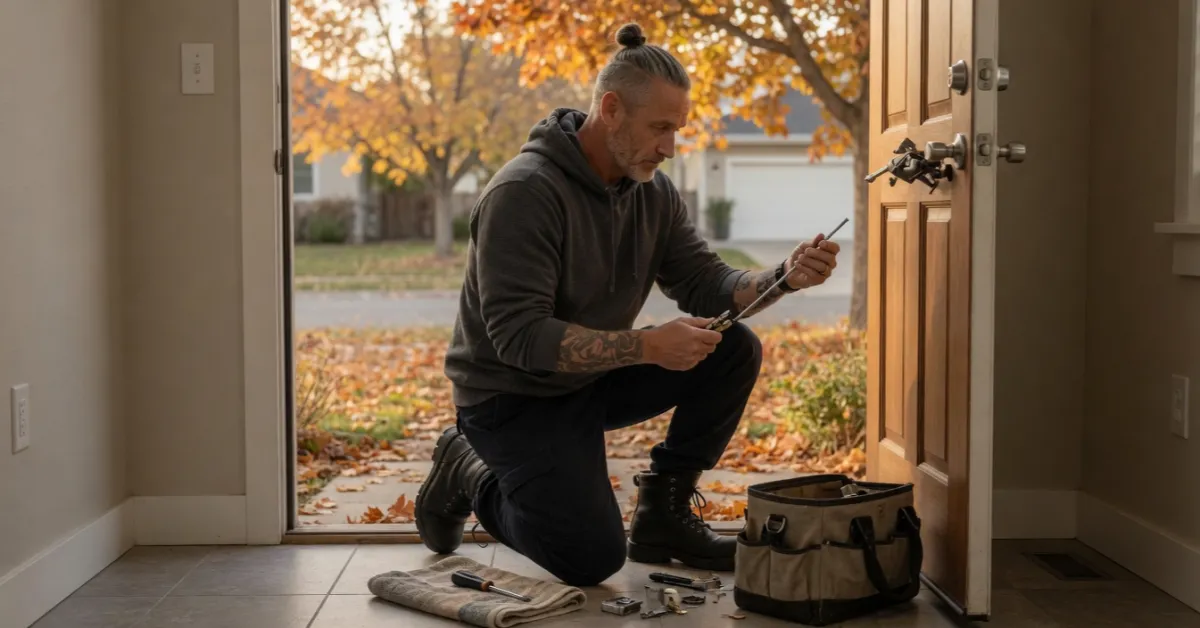
You put the key in, turn it, and it keeps turning. No click, no resistance, and the bolt stays right where it was. Or you flip the thumb turn on the inside and it spins like a loose bottle cap. A deadbolt that spins without moving the bolt is one of the most confusing lock problems a homeowner runs into, because nothing looks broken from the outside.
It is also a call we get regularly in West Jordan, where a lot of homes from the 1990s and 2000s still have the original builder-grade deadbolts. Matt Johnson started GoKey Locksmiths in Riverton in 2015 after the Marine Corps, and a spinning deadbolt is usually a small part failing inside the door, not a sign that someone tampered with it. Here is what is going on, what you can safely try, and when it is time to call.
What “spinning” actually means
A deadbolt has two halves that meet in the middle of the door. The outside cylinder, where your key goes, and the inside thumb turn are joined by a flat metal bar called the tailpiece. That tailpiece passes through the bolt mechanism. When you turn the key, the tailpiece turns a cam, and the cam pushes the bolt out or pulls it back.
When the key or thumb turn spins freely, the connection between those parts has failed somewhere. The most common causes we see:
- A broken or stripped tailpiece. Cheap deadbolts use thin tailpieces made of soft metal. After years of daily use, or one hard turn against a bolt that was binding, the tailpiece snaps or rounds off. The key turns the cylinder, but nothing reaches the bolt.
- Loose mounting screws. The two screws that hold the inside and outside halves together can back out over time. Once the halves pull apart, the tailpiece can slip out of the bolt mechanism.
- A worn cam or bolt mechanism. The part inside the bolt that the tailpiece turns can wear out or crack, especially on a bolt that has been fighting a misaligned strike plate for years.
- A cylinder that came loose from its housing. On some models, the whole cylinder can rotate inside the lock body if a retaining clip or set screw fails.
The important thing is that every one of these is a mechanical failure. The lock does not need a new key. It needs a repair or a new deadbolt.
First, figure out which side still works
Before you do anything else, test both sides of the lock if you can get to them.
If the key spins from outside but the thumb turn works from inside, you may be able to get in through another door, such as the garage door or a back slider, and operate the deadbolt from the inside. Leave it unlocked until it is repaired, and do not use the key on it again. Every extra turn can push a partly broken part further out of place.
If the thumb turn spins from inside but the key works from outside, you can still lock and unlock the door with the key. That buys you time, but get it fixed soon. A failing tailpiece rarely gets better.
If both sides spin and the bolt is extended, the door is locked and you have no way to retract the bolt. That is a lockout, and it needs a locksmith.
Things you can safely try
If the bolt is stuck in the locked position, a few gentle checks are worth a minute:
- Push or pull the door toward the hinges while you turn the key. If the bolt is binding against the strike plate, taking pressure off it sometimes lets a weak connection catch. This works more often in late fall and winter, when doors shrink and shift. Our frozen locks guide explains why cold weather moves doors around.
- Turn slowly and feel for a catch. A tailpiece that slipped out of position can sometimes grab partway through the turn. Turn slowly in both directions. If you feel even slight resistance at one point, hold it there and try to finish the turn.
- Check the inside screws. If you are inside and the bolt is retracted, look at the two screws on the thumb turn side. If they are loose, tighten them by hand with a screwdriver. Do not overtighten, because that can bind the bolt.
If none of that works in a few tries, stop. Forcing a spinning lock rarely ends well.
What not to do
We see a lot of extra damage from well-meaning fixes. Avoid these:
- Do not drill the lock yourself. Drilling a deadbolt without knowing where the cam and bolt sit can leave the bolt stuck in the door frame and turn a repair into a door and frame job.
- Do not pry the door or the trim. A bent jamb or a split door edge costs far more than a lockout call.
- Do not use pliers on the key. Extra force on a key in a spinning cylinder is how keys snap off. If that already happened, our guide on a key broken off in the lock covers the next steps.
- Do not spray lubricant into the keyway and hope. A spinning deadbolt is not a sticky lock. Lubricant will not reconnect a broken part, and some sprays attract dust that makes the cylinder worse later.
How a locksmith handles it
When the bolt is locked and both sides spin, a professional opens the door with the least damage possible. Often that means working the bolt mechanism through the door edge or removing the cylinder carefully, so the door and frame are not hurt. Once the door is open, the fix is usually one of two things:
- Repair, if the lock is good quality and only a tailpiece, screw, or cam has failed.
- Replacement, if the lock is a low-grade model, the parts are worn, or the bolt has been binding for years.
A residential lockout typically runs about $75 to $250, depending on the lock and the time of day. After-hours calls add about $50 to $150. A new deadbolt installation is usually about $100 to $300, including the lock and labor. Those ranges match our full Salt Lake locksmith cost breakdown, and we give you the price before any work starts.
If you replace the deadbolt, you can have the new one keyed to match your other locks so you still carry one key. Our rekeying vs. changing locks guide explains when each option makes sense.
Stop it from happening again
Most spinning deadbolts start with a bolt that has been dragging for a long time. A few habits help:
- Watch for a bolt that sticks. If you have to push or lift the door to lock it, the strike plate needs an adjustment. That extra strain is what breaks tailpieces.
- Do not force a stiff key. If the key gets hard to turn, that is the time to have the lock looked at, not after it fails.
- Choose a better deadbolt next time. A Grade 1 or Grade 2 deadbolt has stronger internal parts than most builder-grade locks. Our deadbolt guide walks through the grades and what to look for.
- Check the screws once a year. Fall is a good time, right before the cold makes doors shift.
West Jordan deadbolt repair and lockouts
Whether you are near Jordan Landing, along 7800 South, or in the newer neighborhoods west of Bangerter Highway, our West Jordan residential locksmith service covers deadbolt repair, replacement, and rekeying. If the door is locked and the bolt will not move, our West Jordan emergency locksmith coverage is the same team and the same pricing rules. We also serve nearby South Jordan and Taylorsville, and you can see everything we do on our residential locksmith page. If you are completely locked out, our house lockout guide has the checklist to run through first.
Contact GoKey Locksmiths
Key spinning in the lock, or a thumb turn that does nothing? Call GoKey Locksmiths at (801) 512-4658. We are licensed and insured, based in Riverton, and serve West Jordan and the rest of the Salt Lake Valley. We will tell you what the lock needs and what it costs before any work starts.
Need a locksmith right now?
GoKey Locksmiths is available 24/7 for emergency service in Salt Lake City, Utah Valley, and surrounding communities.
Call (801) 512-4658