
Frozen Locks in Salt Lake City: What to Do Before You Pour Anything on the Door
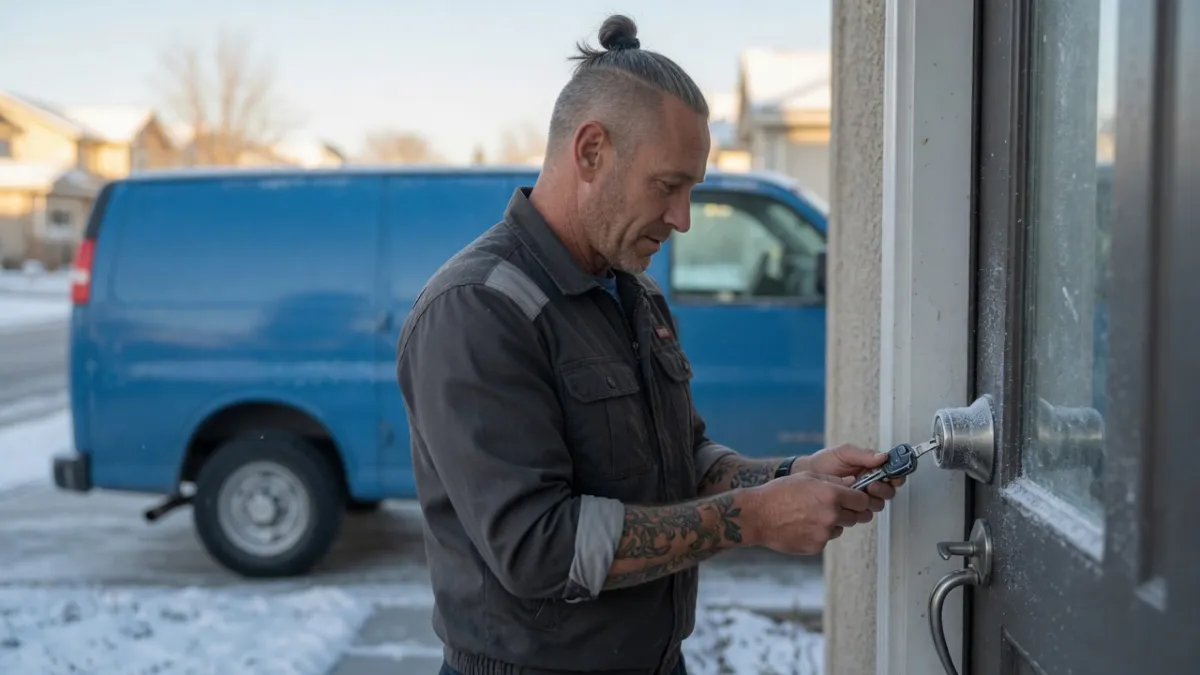
The first cold mornings in the Salt Lake Valley are when a deadbolt that worked all summer stops. The key slides in. It will not turn. It does not feel broken. It feels stuck. Most of the time it is ice in the cylinder, not a lock that has failed.
We see it every winter, from Riverton up through Salt Lake City, mostly on doors that took weather the day before. The fix is usually simple. The damage happens when someone hurries it.
Matt Johnson started GoKey Locksmiths in Riverton in 2015 after the Marine Corps. The rule is the same one we use on a snapped key: stop before the next move on the porch turns a small problem into a drilled cylinder.
Why a Salt Lake lock freezes
A lock freezes when water gets into the keyway and the temperature drops below freezing. The pins cannot move. The key may go in, and then refuse to turn.
Around the valley that water comes from a short list:
- Wet snow or rain blown into a keyway with no cover
- A key you used in the rain, then left sitting in the lock
- A warm afternoon and a sharp overnight drop, which is the usual pattern on the benches and in the south valley
- A storm door or weatherstrip that looks closed and is not, so the deadbolt takes the weather anyway
North and west doors stay frozen longer. They miss the morning sun. A Riverton door facing the Oquirrhs, or a shaded Salt Lake City door, is usually the first to stick. Garage oil makes it worse: the film holds moisture, and that film is what freezes onto the pins.
What not to do on the porch
Do not pour boiling water on the lock. This is the move we talk people out of most often. It can cloud the finish, run into the door edge, and refreeze inside the cylinder once the air is still below freezing. Leave the kettle inside.
Do not use an open flame. A lighter next to weatherstripping, paint, or a keypad is how a frozen lock becomes a scorched door. If you can reach an outlet, a hair dryer on low, held a few inches back and kept moving, is the home method that does not wreck the hardware.
Do not force the key. A cold lock feels like it needs a harder turn. It does not. A worn key is already thin at the cuts, and a hard twist is how the blade snaps off in the deadbolt. If that already happened, leave the stub alone and read what to do when a key breaks off in the lock. Pushing it deeper is what turns an extraction into a drilled cylinder.
Do not keep spraying household oil into the keyway. A water-displacing spray can free a lock once, because it cuts the ice. The residue stays, grabs grit, and makes the next freeze worse. One emergency shot is not a maintenance plan.
What actually works
If you are on the porch and the key will not turn, work in this order.
Stop turning. Take the key out if it comes out smoothly. If it will not, leave it. Wiggling a stuck key bends the blade.
Warm the key, not the door. A minute in a pocket, or in your hands, is enough. A warm key melts a thin film of ice at the pins. Insert it gently. If it does not turn with normal pressure, stop.
Use a lock de-icer if you have one. Alcohol-based, made for locks, thin straw. A short shot, a minute of waiting, then a gentle turn. A little isopropyl alcohol on the key can do the same job. Do not flood the cylinder.
Use gentle heat if you can stay outside safely. Hair dryer on low, kept moving. A hand-warmer packet against the cylinder works when you do not have an outlet. Ice in a small keyway does not need a long bake, and it does not need a flame.
Try another door. Garage entry, back door, side door. If you can get in, the inside thumbturn often frees the frozen door once the room side warms up. Our home lockout guide covers the case where every door is locked.
If none of that moves the key, call. A frozen lock we can reach is usually freed without drilling.
When the ice is gone and the lock still will not work
Thawing does not fix a lock that was already failing. After the cylinder is warm, test the key with normal pressure.
- It turns and the bolt throws cleanly. It was ice. Dry the keyway and stop oiling it. You are done for today.
- The key turns, but the bolt hits the strike and stops. That is often the door, not the lock. Cold pulls a door and a frame at different rates. We adjust the strike. Hip-checking the door makes the hole worse.
- The key still will not turn, or it turns and nothing happens. The pins are gummed, worn, or were damaged by a hard twist while the lock was frozen. That is a rekey if the hardware is solid, or a replacement if the cylinder is sloppy. A tired deadbolt does not get better because the ice melted.
If the hardware needs replacing, our deadbolt guide covers what we install, and the pricing breakdown has the ranges. A new deadbolt install there runs about $100 to $300. A lockout sits in the same residential range as any other home lockout, typically $75 to $250, plus about $50 to $150 after hours. We quote the exact number before we start. Weather is not an extra fee.
Cars, keypads, and the week before it sticks
Car doors freeze the same way: wet weather, then a drop, then a handle that will not lift. Do not pour water on a car door, and do not pry the handle. If the fob will not wake the car and the mechanical key will not turn, that is an automotive lockout. The locked-out-of-the-car steps still apply.
Smart locks fail differently. Cold cuts battery output. A keypad that was marginal in September dies on the first hard night, usually while you are outside. Fresh batteries now are cheaper than a lockout later. If the lock is already flaky, a smart lock install on a mild day is the calmer job.
Before the next cold morning:
- Clean the keyway. If you see an oily film, do not add more oil. We use dry graphite, sparingly.
- Check the storm door. A deadbolt in the weather will freeze. One behind a door that actually latches usually will not.
- If you have to lift the door to land the bolt, fix the strike now. Cold turns a close fit into a miss.
- Retire a thin key. Copy a good original, not a rounded-off copy.
- Walk the front, the garage entry, and the back. The door nobody opened since summer is the one that surprises you.
If a lock is loose, painted over, or already sloppy, say so when you call. New pins do not rescue a lock that is done. Residential lock work is a rekey or a replacement, and we would rather say which one before we are on the porch.
If you are already stuck
Tell us whether it is a single cylinder, a double cylinder, or a keypad, and whether the key goes in. Tell us if another door still opens. That changes the job from a lockout to a repair you can schedule.
We are licensed and insured, based in Riverton, and we cover the Salt Lake Valley including Salt Lake City. Emergency lockouts go through the 24/7 line. A freeze that can wait until daylight is the cheaper version of the same work. Either way, you get a price before we start. Do not pour water on it while you wait, and do not twist harder.
Contact GoKey Locksmiths
Frozen deadbolt, a door that will not latch after the cold hits, or a lock you want serviced before it sticks — call us at (801) 512-4658. We will tell you what it needs and what it costs before anyone is on your porch.
Need a locksmith right now?
GoKey Locksmiths is available 24/7 for emergency service in Salt Lake City, Utah Valley, and surrounding communities.
Call (801) 512-4658