
A Key Snapped Off in the Deadbolt. Here's What to Do.
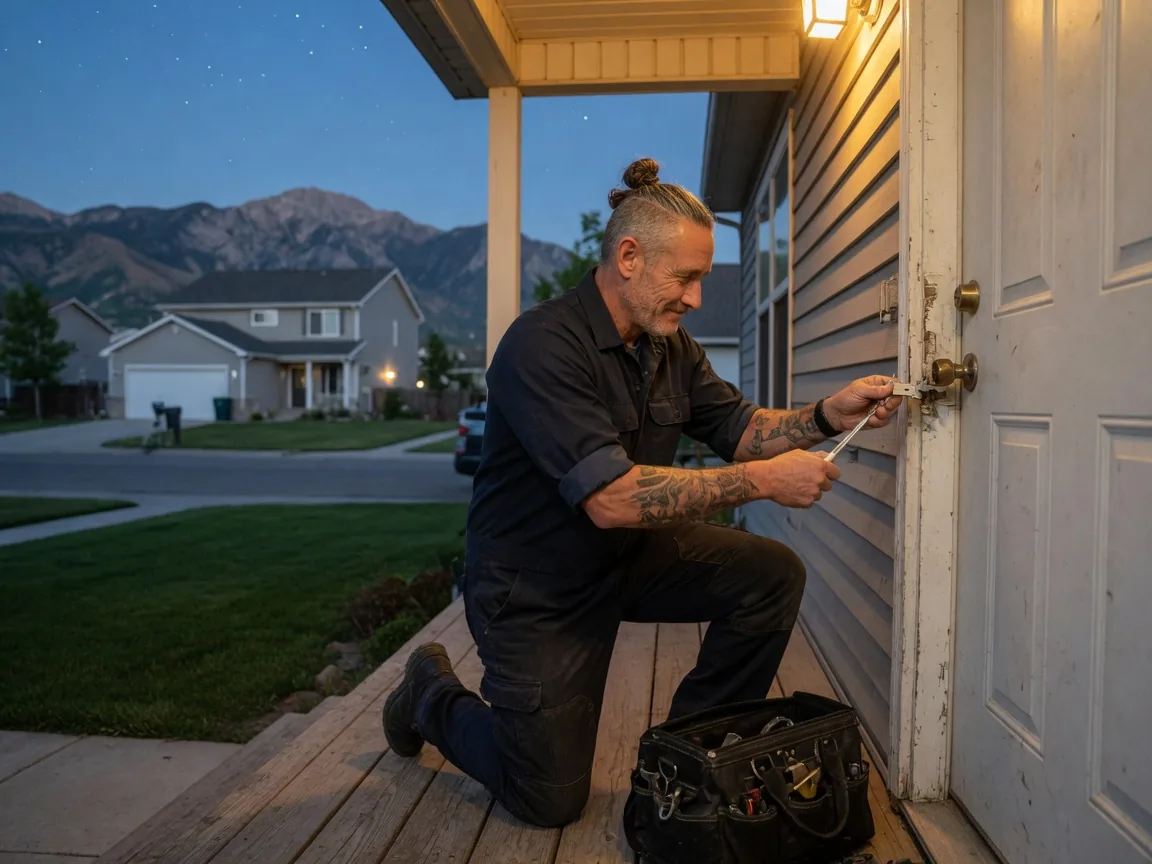
A Tuesday night in South Jordan. The homeowner turned the key, felt it give, and came away holding the plastic head. The metal blade was still inside the deadbolt, and the door was locked.
That’s a common call for Matt Johnson. He founded GoKey Locksmiths in Riverton in 2015, and a snapped key is one of the jobs he would rather get before anyone tries to fix it themselves. Pushing the broken piece deeper is what turns a simple extraction into a drilled lock.
Here’s what he did on that porch, and what to do if it happens at your door.
Stop Turning What’s Left
The instinct is to poke the stub with the broken head, a screwdriver, or a pair of tweezers. Don’t. The blade is already sitting in the pins. Another push sends it past the point where an extractor can grab it.
Leave the stub where it is. If a sliver is still sticking out, don’t wiggle it. Wiggling bends the blade and scores the cylinder.
If you’re outside and the door is locked, this is now a lockout. Check a side door or garage entry the way you would for any home lockout. If those are locked too, call. Standing on the porch with a pair of pliers rarely ends with the door open.
What Matt Did on the Porch
He didn’t drill the lock. A broken key is usually still sitting in the keyway, and the cylinder is fine.
The sequence on that South Jordan door:
- Look at how much blade is left. If any metal shows past the face of the lock, needle-nose pliers or an extractor can grip it. If it’s flush or deeper, the tool has to go in beside the blade and hook it.
- Take the tension off the pins. A key snaps most often while the plug is under pressure. Matt eased that pressure so the pins weren’t clamping the broken piece.
- Hook the blade and draw it straight out. The extractor grabs the cut side of the key. A slow pull brings the whole piece out in one try. Jerking it snaps off a second fragment.
- Test the lock with a spare, or cut a new key from the extracted blade. If the cuts are still readable, that broken key is the pattern for the replacement. If the break destroyed the cuts, the cylinder has to be rekeyed or decoded.
The door opened. The deadbolt stayed on the door. The only new part was a key.
That outcome depends on the stub still being reachable. Once it’s been pushed in, or once someone has sprayed oil and grit into the keyway, the next step is often removing the cylinder. Still cheaper than a new door, still not the first choice.
What It Costs, and When the Lock Has to Go
A straightforward extraction on a residential lock in the Salt Lake Valley is usually in the same range as a house lockout: about $75 to $150, with an after-hours surcharge of $50 to $100 on evenings, weekends, and holidays. Get the quote on the phone before anyone starts. If the cylinder is already damaged, say so. The price changes when the lock has to come apart.
The lock itself needs to be replaced when:
- The key broke because the cylinder is grinding, not because the key was old
- Someone drilled or pried the face of the lock trying to get the piece out
- The pins are packed with glue, super glue, or a snapped-off extractor from an earlier attempt
A new deadbolt, installed, runs about $100 to $300 depending on the grade. That’s the repair from the cost guide. Extraction plus a fresh key is the cheaper path when the hardware is still sound.
Why Keys Snap in the First Place
Matt sees the same three causes on repeat.
A worn key. The cuts round off. You start lifting the key as you turn it, and the head flexes the blade. Brass keys fatigue. If you have to jiggle it, get a new copy cut from the code or from a newer spare, not from the worn one.
A dry or dirty cylinder. Utah dust packs into the keyway. People then spray WD-40 into it, which collects more dust. A dry graphite or a locksmith-grade lubricant is the right product. Oil is not.
Pressure on the door. If the door is sagging, you’re turning the key while pulling or pushing the door. The bolt binds, you twist harder, and the key is the piece that gives. A sticking bolt is a door problem, not a “turn it harder” problem.
What to Do While You Wait
- Leave the broken piece alone.
- Don’t glue anything into the keyway. Super glue is a cylinder replacement.
- If you’re locked out after dark, wait somewhere lit. Matt’s average run through the valley is 15 to 30 minutes, but a porch at night is not the place to experiment.
- Have a spare in mind. If a neighbor or family member has a copy, that key still works once the stub is out. If the only key was the one that broke, plan on a new cut before the technician leaves.
If this keeps happening on the same door, don’t keep cutting copies of a failing key. Rekey or replace the deadbolt and cut two working keys the same day. One stays on your ring. One stays with someone who can actually reach you.
If This Is Your Door Right Now
Call GoKey at (801) 512-4658. Matt covers South Jordan, Riverton, West Jordan, Herriman, Sandy, Draper, and the rest of the Salt Lake Valley and Utah Valley, including nights and holidays.
Tell him the key snapped, whether any metal is still visible, and whether anyone already tried to dig it out. That last detail is the one that decides whether this is a ten-minute extraction or a cylinder coming off the door.
Need a locksmith right now?
GoKey Locksmiths is available 24/7 for emergency service in Salt Lake City, Utah Valley, and surrounding communities.
Call (801) 512-4658