
Key Fob Acting Up in the Cold? How Sandy Drivers Can Tell a Dead Battery From a Bad Fob
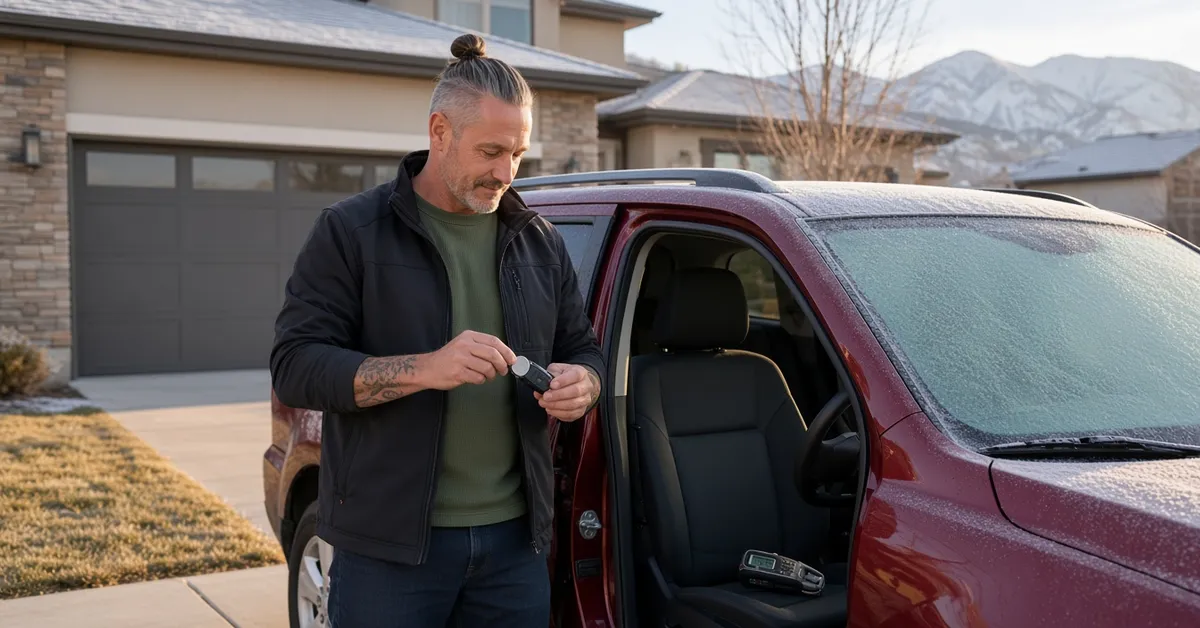
The first cold snap of the season brings a familiar call. Someone walks out to the driveway, presses unlock, and nothing happens. They press it again, closer to the car, and the doors finally click. Is the fob going bad, or is it just the battery?
Most of the time, it is the battery. Cold weather does not create the problem, but it shows it. Sandy mornings in November and December often start well below freezing, especially on the east bench toward Alta Canyon and the mouth of Little Cottonwood. A small coin battery that worked fine in September can drop just enough in the cold to stop talking to your car. Here is how to tell the difference, what to try first, and when it makes sense to call a locksmith.
Why fobs act up when it gets cold
Most key fobs run on a small lithium coin battery, usually a CR2032 or CR2025. As a battery ages, its voltage slowly drops. Cold temperatures lower its output even more for a while. So a battery that is near the end of its life may still work on a warm afternoon but fail on a 20-degree morning.
That is why the problem seems to come and go. If the fob works again by lunch, it is not “fixed.” The battery just warmed up. If your fob is three or more years old and it has never had a new battery, the cold is telling you it is time.
Signs it is the battery
A weak battery usually gives you warnings before it quits. Watch for these:
- The range gets shorter. The fob used to unlock from across the parking lot near South Towne. Now you have to stand next to the door.
- You have to press the button more than once. One press used to be enough.
- It works after you warm it up. If the fob starts working after a few minutes in your pocket or in your hand, the battery is the likely cause.
- The small light on the fob is dim or does not blink. Not every fob has one, but if yours does, check it.
- Your dashboard shows a “key battery low” message. Many newer cars with push-button start show this warning. Do not ignore it.
If you see one or more of these signs, start with a fresh battery. It is the cheapest fix. As our car key replacement guide notes, a new coin battery costs only a few dollars at most pharmacies and hardware stores.
How to change the battery the right way
Check your owner’s manual or the back of the old battery for the correct type before you buy. Then:
- Open the case carefully. Many fobs have a small slot along the seam. A coin or a thin plastic tool works better than a screwdriver, which can crack the case.
- Note which side faces up. Put the new battery in the same way.
- Do not touch the circuit board with your fingers or metal tools. Hold the battery by its edges.
- Snap the case closed firmly and test every button: lock, unlock, trunk, and remote start if you have it.
Most fobs keep their programming when you change the battery. A few vehicles need a short resync step after a battery change. Your owner’s manual will say if yours does.
Signs the fob itself is failing
If a new battery does not fix the problem, the fob may be the issue. These signs point away from the battery:
- Only one button works, or one button never works, even with a fresh battery.
- The case is cracked, or the buttons feel loose or mushy. Moisture and dirt get in through cracks, and that damages the circuit board.
- The fob got wet. A trip through the washing machine or a drop in the snow can ruin the electronics.
- The car does not recognize the key at all, even when the fob is right next to the start button.
- The fob works for the doors but the car will not start, or the other way around. This can mean the transponder chip or the remote part of the fob has failed.
Also try your spare fob, if you have one. If the spare works fine, the problem is your main fob. If neither fob works, the issue may be with the car, such as a weak car battery or a receiver problem.
What to do if the fob dies and you are locked out
Most fobs have a metal key blade hidden inside. Press the small release button or slide on the fob, and the blade comes out. Many cars also hide the door key cylinder under a small cap on the driver’s door handle. Your owner’s manual will show where it is.
On many push-button start cars, you can still start the car with a dead fob battery. You hold the fob against the start button, or put it in a marked spot in the console, and the car reads the chip inside. Check your manual for the exact spot.
If the blade will not turn because the lock is frozen, do not pour hot water on it. Our frozen locks guide explains what to do instead. And if you cannot get in at all, our post on what to do when you are locked out of your car walks through your options.
Replace or repair: what it costs
Sometimes a fob only needs a new case or a battery. Other times the electronics are done and you need a new fob programmed to your car. Our key fob replacement service covers both.
Here is what to expect for common key types, based on our car key replacement cost guide:
- Separate remote fob (older cars with a plain ignition key): usually about $50 to $150 for the fob and programming.
- Remote head key (key blade and remote buttons in one piece): usually about $150 to $350.
- Smart key or proximity fob (push-button start): usually about $200 to $500 or more, with luxury brands at the higher end.
If you are locked out and need us to open the car first, a car lockout usually runs about $100 to $300, as our locksmith cost breakdown explains. Calls after regular business hours can add an after-hours fee. We always give you the price before any work starts.
A locksmith can often program a replacement fob on-site, so you do not need to tow the car to a dealer. Matt’s general advice is simple: if you only have one working fob, get a spare made now. Making a copy from a working key is almost always faster and cheaper than replacing your only key after it is lost or dead.
A few cold-weather habits that help
- Change the fob battery every two to three years, before winter, even if it still works.
- Keep the spare fob inside the house, not in the car. A spare in the glovebox does not help when you are locked out.
- Keep the fob in an inside pocket on very cold mornings, not in an outside jacket pocket or on a key ring hanging from your bag.
- Get a cracked case fixed early. A small crack lets in moisture from snow and slush, and that is what kills the circuit board.
Key fob help in Sandy
Whether you are parked at home near Dimple Dell, at work along State Street, or at the Sandy Civic Center, our Sandy key fob replacement service comes to you. We handle most makes and models, from trucks and SUVs to push-button start cars. You can learn more about everything we do on our Sandy locksmith page and our automotive locksmith page. We also serve drivers in nearby Draper and Midvale.
Contact GoKey Locksmiths
Fob acting up, or down to your last working key? Call GoKey Locksmiths at (801) 512-4658. We are licensed and insured, based in Riverton, and serve Sandy and the rest of the Salt Lake Valley. Tell us your year, make, and model, and we will give you the price before any work starts.
Need a locksmith right now?
GoKey Locksmiths is available 24/7 — Including Holidays for emergency service in Salt Lake City, Utah Valley, and surrounding areas.
Call (801) 512-4658